
How to Adjust After Leaving a Postpartum Care Center With Your Baby
2021.01.20

Right after leaving the postpartum care center, consider ordering a few days of postpartum meals or delivery service so new moms can eat well and rest well. After giving birth you may treat yourself to caffeine or other special foods, but remember to keep that breast milk away from baby during this time so baby doesn't get overstimulated. Back home, facing the little boss in person, the most common problem is: never enough sleep. As the saying goes, know yourself and know your enemy; once moms understand baby's sleep times and routine, they can steal a little time for good sleep.
Babies under one month sleep an average of 16.5 hours a day, usually in small cycles of 2-3 hours with the longest stretch around 4 hours, so night feedings are often needed. Moms are advised to sleep when baby sleeps to catch up on rest. New moms must feed baby, change diapers, wash bottles, do laundry, and soothe crying, and also need to grab meals and rest during baby's sleep. If the house is a mess during this time, ignore it for now or ask family to help clean.
Babies a few weeks old still like to curl up and seek the familiar feeling of the womb. A swaddle is a great tool for winning mom more sleep. Research has found that swaddling can indeed help babies sleep. Newer swaddles give baby a familiar feeling, plenty of calm and security, reduce the amount and length of crying, and make it easier to fall asleep peacefully. Babies aged 0-3 months often show reflex movements; the four elastic features of newer swaddles reduce self-startling, and you needn't worry about baby kicking it open frequently. The J-shaped zipper also makes diaper changes easy without easily waking baby. The back-position arm design reduces the chance of rolling to the stomach, and as baby grows you can free one or both hands to develop fine motor skills; later the J-zipper can even convert to an anti-kick blanket, among other benefits.

After about a month and a half, babies can sleep around 6 hours at night. From the one-month mark you can slowly begin training sleep habits: bathe baby at a fixed time at night, and use the comfort after the bath, dim lights, a quiet environment, familiar objects, and massage to relax baby's body and mind. Most crying is because of hunger, so after the last feeding and burping at about 11 pm, baby can be full and sleep well until morning.
Consider gradually setting up a day-night pattern for baby: during the day, play with baby more to increase activity and avoid letting baby sleep; at night, no matter how awake baby is, don't play for long. A night light is suggested so baby clearly understands the difference between day and night, and then you can slowly lengthen sleep. When baby sleeps well, mom's sleep benefits too.
Sleep plays an extremely important role in a baby's growth. Studies show infants grow three times faster while asleep than awake, so babies who get enough sleep generally grow well in height and weight. At this stage, baby's hormones are constantly changing so baby can grow quickly, so besides feeding, lots of sleep is needed to support growth. As the saying goes (in Taiwanese), "grow an inch overnight": sleep well and grow well.
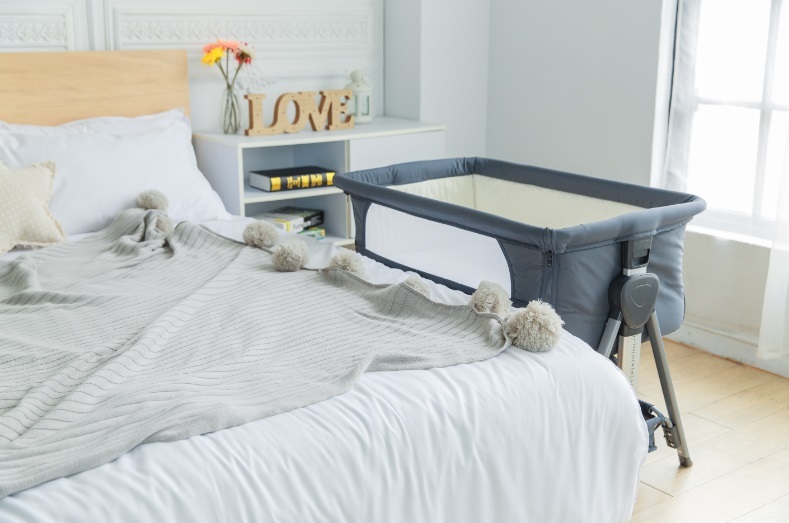
A good sleep environment matters. We suggest sharing a room but not a bed. A crib gives baby a good sleep environment (with enough room to move), makes breastfeeding easier for mom, and lets parents check on baby's routine at any time. Moderate separation also means baby won't be woken by adults turning over, and you won't worry about injuring baby while asleep and sleeping poorly. After all, when baby sleeps well, the whole family can rest.
By recording baby's routines, such as eating, sleeping, bowel movements, temperature, baths, and play, you learn baby's personality through the caregiving process and meet baby's needs as best you can. Once the habit of sleeping through the night slowly forms, you can leave the painful, sleep-deprived period behind. Every new mom needs some time to observe baby's personality and adapt to each other, so you can give baby the help needed in time and make the day go more smoothly and happily.

Caring for a baby is not easy, and choosing good parenting tools is a way of being kind to yourself. Also ask your husband and family for help when needed, especially if it's your first baby. Don't demand perfection of yourself; when necessary, ask friends and relatives with parenting experience for advice and help to get through this special time together. Try letting your husband take over after work so mom can catch her breath and rest a little.
Mang Mang Featured Articles:
How to Choose a Good Bedside Crib? 2025 Crib Buying Guide!
The Best Baby Swaddle: A Buying Guide Parents Need to Know
Choosing the Right Play Mat: A Buying Guide