2022.07.25
How long should a baby sleep each day?
A 2015 study by the US National Sleep Foundation suggests that newborns may need an average of about 16 to 19 hours of sleep a day.
By age group, the recommendation is 14 to 17 hours a day for newborns aged 0 to 3 months,
12 to 15 hours for infants aged 4 to 11 months, and 11 to 14 hours for toddlers aged 1 to 2,
10 to 13 hours a day for preschoolers aged 3 to 5,
and 9 to 11 hours a day for elementary school children aged 6 to 13.
Three common baby sleep positions explained
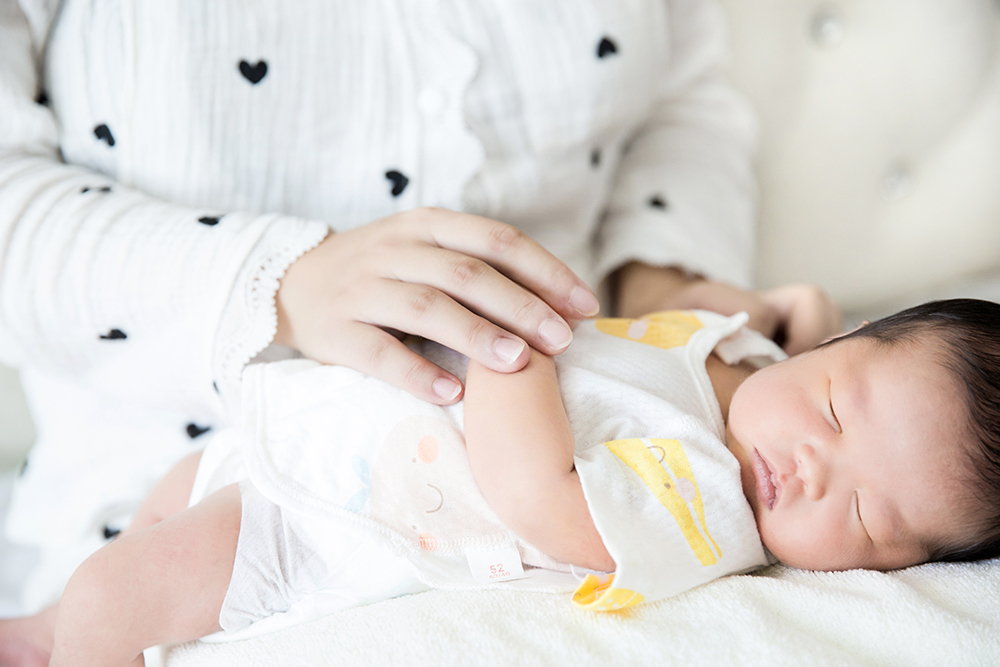
1. Back sleeping:
For babies in their first 3 months, sleeping on the back is recommended. This position lets a baby relax their muscles and move their limbs freely, and the baby's face is not covered by bedding, which reduces the chance of airway blockage.
2. Side sleeping:
Side sleeping is a better position for babies in the first 3 months after birth. It takes head shape into account and makes it easier to watch the baby's facial expressions. Right after a feed, lying on the right side helps prevent spit-up and helps the stomach empty. If you use side sleeping, parents should still switch the baby between left and right sides often to help shape a nicely rounded head.
3. Stomach sleeping:
Once the baby's head and neck support gradually develop, tummy sleeping may be considered depending on the situation. With the face down and the back of the head up, it does not deform the head and can help shape a well-rounded head.
Baby's Best Sleeping Position
[Back sleeping is the best sleep position for babies] For babies aged 0 to 1, back sleeping is without doubt the best position.
Its advantage is that it is the safest. Its downside is that some parents feel the baby wakes more easily, sleeps less soundly, or has trouble falling asleep. But this tendency to "wake more easily" is exactly what makes back sleeping safer.
Risks of tummy sleeping for infants
When it comes to infant sleep safety, pediatricians recommend back sleeping. Yet when the media report on tummy sleeping and sudden infant death, they often link tummy or side sleeping, suffocation, and sudden infant death together as one line.
But this kind of reporting is problematic. Sudden infant death should refer to cases where no cause can be found even after a detailed investigation. If suffocation is confirmed as the cause, then the cause is suffocation, not sudden infant death. Such reporting gives the public the wrong impression that as long as a tummy-sleeping baby does not suffocate, it cannot lead to sudden infant death.
So today we will set suffocation aside and look at the other effects of tummy sleeping:
Risks of tummy sleeping:
1. Low blood oxygen and high carbon dioxide:
Tummy and side sleeping make it easy for a baby to breathe back in the air they just exhaled. That air has more carbon dioxide and less oxygen, which raises the carbon dioxide level in the baby's blood and lowers the oxygen level.
2. Raised body temperature:
In a tummy-sleeping position the body sheds heat less easily, so tummy sleeping is more likely than back sleeping to cause overheating. Overheating is one of the risk factors for sudden infant death.
3. Effects on the autonomic nervous system:
Tummy sleeping affects the autonomic nerves of the cardiovascular system and reduces the oxygen supply to the brain. This effect is most noticeable when babies are two to three months old.
In addition, Taiwan's Health Promotion Administration under the Ministry of Health and Welfare also offers the "5Safe Sleep Tips" mnemonic for new parents to follow so that babies can grow up healthy and safe:
"No tummy sleeping": The correct position is on the back. Side sleeping is not recommended either, since babies can easily roll onto their tummy. Also never let a baby sleep on their tummy on a parent or caregiver.
"No pillow":1year-olds and younger do not need any pillow, and the head does not need to be raised.
"No bed sharing": Follow the "same room, different bed" principle. Do not let a baby sleep in the same bed as the main caregiver or siblings.
"No overheating": Keep the room ventilated. If extra warmth is needed, use a sleep sack or wrap the baby in a swaddle, and be sure to keep the arms out and the face uncovered.
"Nothing soft": The sleep area should have nothing soft in it, such as pillows, quilts, blankets, or stuffed toys. The mattress should be flat and firm, and crib bumper pads are not recommended.
How Sleep Position Affects Head Shape
To help your baby get a nicely shaped head, make adjustments in the first 6 months! After 6 months a baby's head shape becomes more fixed and takes more lasting pressure to change; after about 1.5 years the fontanelle gradually closes and head shape is almost set!
1. Back-sleeping babies tend to have a flatter back of the head and a wider face.
2. Side-sleeping babies tend to have a longer, slimmer face. Remember to alternate the left and right sides to help shape a nice,
round head! Also take care that the baby's outer ear is not pressed forward.
3. Face and head shape changes with tummy sleeping are similar to side sleeping. Remember to turn the baby evenly to both the left and right sides.
Is a baby pillow necessary?
Before age one, a pillow is not a necessary item.
Most babies have a nicely rounded back of the head after birth. When sleeping in the correct "back" position on a suitable bed, the head naturally turns to either side without flattening the back of the head, and suffocation is less likely. But with a pillow, whether square, U-shaped, or oval, because it sits inside the baby's bed, it can easily press on or block the nose and mouth when the baby rolls over or turns their head. Pediatric specialists also advise against using any pillow before age one. Because a pillow sits right under the head, it pushes the chin toward the chest, bends the airway, and can cause breathing difficulty.
Further Reading: 5 Baby Sleep Positions and What They May Say About Personality
Sleep position plays a big part in a baby's development, and it is also said to relate to personality! Here are five baby sleep positions and the personalities they are said to match. See whether your baby's personality fits their sleep position!
1. Arms behind the head
If you find your child sleeping with both arms raised and placed behind or beside the head, this suggests a relatively strong sense of pride. In daily life they care about what others think of them and whether they get attention. These children usually grow up confident, optimistic, and warm, the social butterfly type.
2. Starfish
This pose is the opposite of how a child curls up in the womb. A baby sleeping spread out like a starfish is not resisting or being contrary. Parents can relax: it suggests the child feels very secure in their current surroundings and lives at ease. These children are optimistic, not shy around strangers, and adapt well.
3. Tummy sleeping
When a child sleeps on their tummy with limbs pressed to the bed, it hints at a strong protective instinct, like a dinosaur lying flat on the ground to protect itself. It also suggests a child with a lot of pride who cares what others think. Compared with the two positions above, these children are more introverted and keep many thoughts and ideas to themselves.
4. Side sleeping
This is a very common baby sleep position. It suggests an easygoing child who likes being with people. It also suggests they are straightforward and trust others easily. Side sleeping is more open than tummy sleeping and more reserved than back sleeping. These children are approachable and make friends easily.
5. Curled up
A baby who curls up looks like a fetus still in the mother's womb. This suggests a sensitive child who is reluctant to leave their comfort zone. They are relatively careful and care about others' feelings when interacting, so they are also kind, considerate kids who look after others.
Mang Mang Featured Articles:
Click to watch 👉 How to Choose a Good Bedside Crib? Key Tips for Choosing a Baby Crib (2022 Edition)!
Click to watch 👉 The Best Baby Swaddle: A Buying Guide Parents Need to Know
Click to watch 👉 Choosing the Right Play Mat: A Buying Guide