
[2026 Latest] How to Choose a Baby Swaddle? The Right Newborn Easy Swaddle Helps Baby Sleep Through the Night!
2026.06.25
In the early days after welcoming a new life, each cry and each waking leaves parents both heartsick and flustered. Especially when sleep is unstable, baby easily wakes often from the startle reflex or lack of security, making care more tiring. A suitable baby swaddle often brings unexpected calming effects and becomes an indispensable part of daily life in many families.
From wrapping methods and material choices to usage habits at different growth stages, Mang Mang hopes to accompany parents from a perspective closer to real parenting life, helping you find a rhythm that works for you and your baby. When baby sleeps soundly, life gets easier too, leaving a little more room and peace in each day together.
- Why Use a Baby Swaddle? Does a Newborn Have to Be Swaddled?
- What Types of Baby Swaddles Are There? Styles and Materials Compared
- Baby Swaddle Functions: What Are the Uses and Benefits of a Swaddle?
- How to Use a Swaddle by Newborn Growth Stage: Baby Swaddle Age Guide
- What Are the Ways to Swaddle a Baby? The Correct Way to Wrap a Baby Swaddle
- How to Wash and Care for a Baby Swaddle
- Factors to Consider When Choosing a Baby Swaddle
- Notes on Using a Newborn Swaddle
- Baby Swaddle Buying FAQ
- Bedtime Baby Swaddle Product Introduction
- New Baby Swaddle Recommendations | Cooling Summer Bedtime Baby Swaddle Product Introduction
- Favorite Swaddle Recommendations | Mang Mang Newborn Swaddle Quality and Safety Certifications
- Baby Swaddle Customer Reviews
- Mang Mang's Selected Swaddle Recommendations | The Most Thoughtful Protection for Baby
Why Use a Baby Swaddle? Does a Newborn Have to Use a Newborn Swaddle?
A baby swaddle is not just a cute parenting item but a great ally for many parents. Experts say that using a swaddle in the early newborn period can effectively help build security, soothe, and improve sleep quality. A swaddle mimics the snug wrapping of the womb and helps baby in several ways, including:
- Promotes security: a swaddle mimics the womb and gives baby security, reducing the startle reflex.
- Fewer wake-ups: wrapping baby helps prevent waking from outside stimulation, especially during sleep.
- Self-defense mechanism: the startle reflex is part of the human self-defense mechanism, an automatic reaction to unknown stimuli, and a swaddle can help ease it.
- Snug wrap of hands and feet: increases baby's body awareness, helping sleep
- Regulates temperature: baby feels comfortable and falls asleep more easily
- Moderate snugness: provides a moderate wrapped feeling, easing colic and helping baby sleep more sweetly
Without a swaddle, letting baby sleep on the stomach can bring risks such as sudden infant death syndrome (SIDS),SIDS most often occurs before six months of age, especially at two to four months. Many environmental factors raise SIDS risk, such as stomach sleeping, sleeping on a pillow or in a bed with toys, or an overly soft bed, and all of these can be avoided. Stomach sleeping is the most likely to cause SIDS; in the United States, promoting back sleeping from 1994 reduced SIDS deaths by nearly 40%.
Experts also advise that the safest way to effectively lower SIDS risk is to put baby to sleep on the back, remove loose items from the crib, and preferably dress baby in a single sleep outfit to reduce the risk of blankets covering the nose and mouth. If baby likes sleeping on the stomach, always turn baby back onto the back; the mattress must be firm with no head pillow, to avoid suffocation risk. Stay away from smoke, and keep the room at a comfortable temperature.
So using a baby swaddle effectively can help baby sleep more soundly.
So what are the common newborn sleeping positions? Here are three common ones:
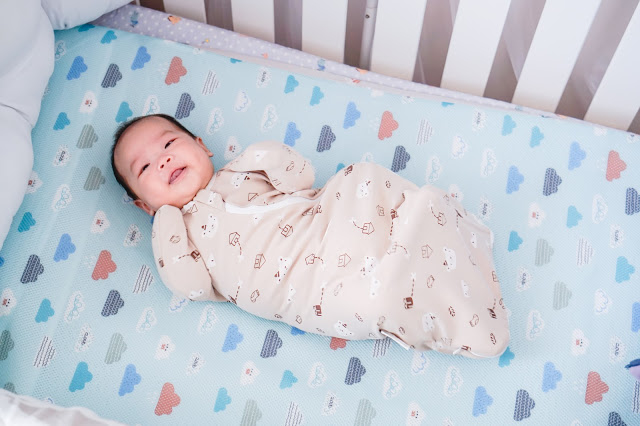
1. Back sleeping:
For babies in the first 3 months, back sleeping is recommended. It lets baby relax their muscles and move limbs freely, and baby's face isn't covered by bedding, reducing airway blockage.
2. Side sleeping:
Side sleeping is an acceptable position for babies in the first 3 months. It takes head shape into account and makes it easier to watch baby's facial expressions.
3. Stomach sleeping:
As baby's head and neck support gradually develop, stomach sleeping may be allowed depending on the situation. Lying face-down with the back of the head up does not deform the head and can help shape a nice head, but the risk is higher, and a caregiver must be present during stomach sleeping.
Baby's Best Sleeping Position
For babies aged 0-1, back sleeping is without doubt the best position. Its advantage is that it's the safest; the downside is that some parents feel baby wakes more easily, sleeps less soundly, or has trouble falling asleep. A well-designed swaddle helps smooth over the startle-waking and difficulty falling asleep.
Now that you know common baby sleeping positions and that back sleeping is best, choosing the right newborn swaddle becomes very important. So what types of baby swaddles are there?
What Types of Baby Swaddles Are There? Swaddle Styles and Materials Compared
There are three common types of baby swaddles:
1. Traditional Swaddle
Traditional swaddles are mostly made of breathable, soft gauze, emphasizing comfort and breathability. You adjust the tightness to baby's own weight and height, and even a snug wrap won't make baby stuffy. Because a newborn swaddle has a large area, once baby is bigger it can serve not only as a swaddle but also as a stroller cover, nursing cover, or small blanket. It has a long service life and is a high-value choice. However, since you fold it by hand, the learning curve is higher for new parents and takes time to get used to.
2. Easy Swaddle
Because traditional swaddles involve complex steps, "easy swaddles" appeared on the market. They need no prior learning, and a few simple steps wrap baby fully, making them easier for new parents. A common design uses hook-and-loop closures to hold baby's hands below the shoulders, helping reduce the startle reflex and keep a steady sleeping position.
3. New-Style Swaddle - Back-Sleeping Swaddle
This new style of swaddle considers baby's need for natural movement, keeping a snug feeling while letting baby naturally raise their hands and stay in a back-sleeping position, reducing the risk of suffocation from rolling over. The arm sleeves let baby's hands move and are hard to wriggle out of, and can be used up to 4 months and beyond. Some designs let you unfasten the sleeves so baby can develop hand movements, or convert into an anti-kick blanket, sleep vest, play mat, and other multi-purpose products, truly versatile, saving money and making care convenient.
Based on the three common swaddles above, Mang Mang has summarized the features and uses of each style:
2. Fold-back arm sleeves
3. Two-way zipper, so diaper changes are less likely to wake baby
4. Keeps baby in a back-sleeping position, adding security
2. Adds security
3. Keeps baby in a back-sleeping position
2. Long service life
3. Takes time to practice
For outings / sleeping blanket
Replace every 3-4 months
Usable up to 12 months at most
From the table, although a traditional swaddle has a long service life, it takes time to learn. Thenew butterfly swaddleis simply laid under baby on the back and zipped up; for diaper changes you just unzip it. The new swaddle is also stretchier than a traditional one, and although the price is higher, it is clearly more convenient.
So how do the materials of different baby swaddles differ? The table below covers several common swaddle materials.
2. Bacteriostatic and antibacterial
3. Absorbent and breathable
4. UV-resistant
5. Odor-absorbing
2. Lightweight material
3. Highly breathable
4. Stays cool
2. Moisture-retaining and warm
3. Soft material, gentle on sensitive skin
4. Easy to wash and resistant to pilling
5. Heat-resistant and alkali-resistant
Breathability and instant water absorption decline gradually
Slow to dry after washing
Multi-layer material easily breeds bacteria
Choosing swaddle material by temperature not only keeps baby from catching a chill but also improves overall comfort.
Summer Baby Swaddle Recommendations
Choose breathable materials such as gauze, bamboo fiber, or cooling fabrics, which help wick sweat and avoid stuffiness. Machine-washable quick-dry materials are especially recommended, so washing at night is no worry.
Winter Warm Swaddle Recommendations
Thick cotton, double-layer designs, or wrap-style swaddles are best for air-conditioned rooms or cold snaps, adding warmth without losing flexibility.
Different swaddle materials have different pros and cons and things to watch for in buying and use!
Sizes and thickness vary by brand, so moms can choose a suitable size according to baby's height and weight. We also suggest changing swaddle thickness with the weather and buying 1-2 extra swaddles to rotate, since baby may spit up or drool and soil a swaddle, and having another to switch to is better!
Baby Swaddle Functions: What Are the Uses and Benefits of a Newborn Swaddle?
Since there are so many types of baby swaddles, here are the two main functions of a baby swaddle:
Function 1 - Gives a strong sense of security for more restful sleep
A baby wrapped in a swaddle is surrounded by steady pressure all over the body, like being in mom's womb, which gives a certain sense of security and keeps emotions calmer. Also, wrapping limits the reflex movements of baby's hands and feet so they aren't too large, helping baby sleep more soundly.
Function 2 - Regulates baby's temperature
A newborn's temperature regulation is not yet fully developed, and a swaddle helps maintain body temperature and avoid discomfort from being too cold or too hot. In cold weather it can be combined with pajamas for added warmth, and in summer choose a breathable, lightweight material.
When baby is wrapped in a swaddle, baby feels as if back in mom's womb, which feels especially safe and comfortable and makes it easier to fall asleep than usual. So besides giving baby more security and sweeter sleep, using a swaddle has many other benefits:
- A baby in a swaddle, mimicking being held in the womb, will sleep longer and more sweetly
- Baby's anxiety is reduced when swaddled.
- Reduces waking caused by the startle reflex.
- Helps keep baby sleeping on the back, avoiding the risks of stomach and side sleeping.
- A swaddle also benefits parents: the more soundly baby sleeps, the longer parents can sleep!
In summary, using a baby swaddle brings the following four benefits:
1. Helps Sleep
Babies fresh from the womb still like to curl up, and for the first few weeks they keep looking for the familiar feeling of the womb, the security of being supported and snugly wrapped. A swaddled baby feels the same familiarity as in the womb, feels calm and secure, cries less, and falls asleep more easily. Babies aged 0-3 months also show the startle reflex, which swaddling can reduce. Research has found that swaddling can indeed help babies sleep, letting baby return to deep sleep more quickly after waking and reducing the need for others to step in. Because baby's hands are held by the swaddle, baby is less likely to scratch their face.
Child development expert Dr. Wang Hung-Che has noted in an article that babies are curled up in the womb, so in the first weeks after birth they still show physiological curling, most obviously at the hip and knee joints, which stay bent when lying flat. We have long been used to swaddling babies, especially restless, easily startled, or hard-to-soothe babies, because after being given that wrapped feeling they settle and quiet down more.
2. Regulates Temperature and Keeps Warm
One of the most basic functions of a swaddle is keeping warm. Maintaining a suitable body temperature with a swaddle not only keeps baby comfortable but also prevents chills.
3. Easier Breastfeeding
New parents need swaddles more: one, they make holding baby easier to get the hang of, and two, they give baby security to aid sleep. A swaddled baby focuses better on feeding, making a swaddle a helpful aid for new moms just starting to breastfeed.
4. A Multi-Purpose Tool
Besides helping babies under three months fall asleep, once baby starts making bigger movements, the swaddle can be used as a stroller cover, nursing cover, small blanket, and more
Besides the benefits above, using a swaddle the right way not only improves its effect but also helps avoid hip dysplasia in baby. So how do you swaddle baby correctly? Here are some tips:
- Use a thin, breathable swaddle.
- Wrap no higher than baby's shoulders, meaning the neck and head should not be covered.
- Keep baby sleeping on the back; never let a swaddled baby sleep on the side or stomach.
- Don't wrap baby too tightly, and don't use a swaddle that wraps baby's hips and legs too snugly. Wrapping too tightly can lead to hip dysplasia and is one reason the hip joint may not form correctly.
How to Use an Easy Swaddle by Newborn Growth Stage: Age Guide
| Growth Stage | Baby's Physical Changes | How to Use the Swaddle |
| Early Stage(1~3months) | Newborns easily lack a sense of security and startle during sleep | Day or night, a baby swaddle can wrap baby snugly, hands and body held close, in a back-sleeping position. This increases baby's sense of security, reduces how often the startle reflex occurs, and helps baby sleep peacefully. The arm sleeves also help baby explore their face while soothing without scratching themselves. The wide hem lets baby's legs stretch freely, supporting leg development. |
| Middle Stage(3~6months) | Baby starts rolling over, but bones are not fully developed, so rolling smoothly or lifting the head on their own is still hard | Use the swaddle while baby is sound asleep so baby lies naturally on the back and is less likely to suffocate from rolling awkwardly, and unwrap it when baby wakes to move freely. Because this is the rolling period, turn the arm sleeves from inside to outside and free baby's left and right hands in time to develop finer movements. |
| Later Stage(6months and older) | Baby's bones are nearly fully developed, and baby can lift the head, roll over, and sit and lie down more independently | Some swaddles are soft and breathable, and once baby no longer needs wrapping, they can serve as a nursing cover for privacy and convenience The swaddle can be used as an anti-kick blanket. Open the two-way zipper on the hem and it works as an anti-kick sleep vest as baby grows, keeping warm without worrying about kicking off blankets in the night, preventing chills at night.As baby gets a little older it can be used as ablanket to keep baby warm and comfortable It can be used as a stroller coverto block sun or wind and dust, or opened up as a play mat while baby plays. Some soft swaddles can also be turned into a crib sheet or pillowcase, continuing to be useful. |
What Are the Ways to Swaddle a Newborn? The Correct Way to Wrap a Baby Swaddle
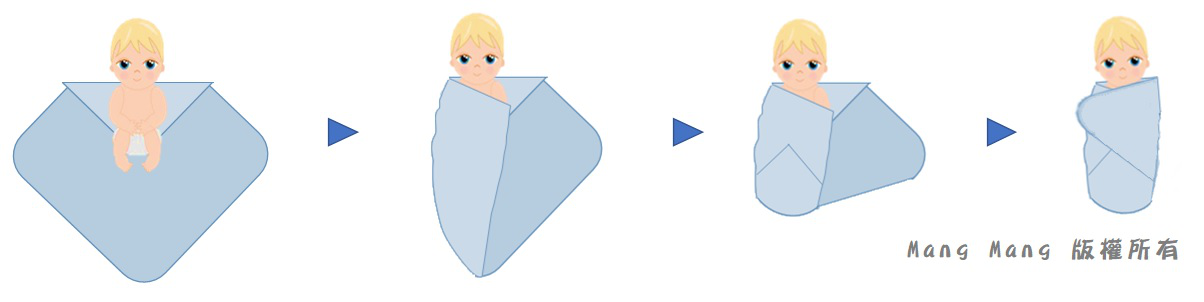
1. Traditional Swaddle or Large Bath Towel (choose material by season)
A traditional swaddle provides warmth and security, but the correct wrapping method is essential to keep baby comfortable and hips healthy. Here is a detailed step-by-step illustrated tutorial; please refer to the diagrams below:
-
Prepare the swaddle and position baby:
- Lay the swaddle (or large bath towel) flat in a diamond shape, and fold the top corner down about 15-20 cm to form a flat top edge.
- Gently lay baby on their back in the center of the swaddle, with the head above the folded top edge and the shoulders level with it. Make sure baby's clothes are smooth.
- Visual guide:Make sure the top edge of the swaddle is below baby's shoulders and doesn't cover the face.
-
Wrap the first side:
- Gently place baby's right hand (or left hand) naturally at baby's side without pulling it straight.
- Pull the right side (or left side) of the swaddle across baby's body and tuck it snugly under baby's left (or right) back, using baby's weight to hold it temporarily.
- Visual guide:Now one of baby's arms is wrapped and the body is wrapped diagonally.
-
Handle the foot space:
- Fold the bottom of the swaddle up to cover baby's feet.
- Important principle:Make sure baby's legs can bend naturally into an "M" shape, knees apart and soles facing up, leaving at least a fist's width of space, to avoid over-restricting and affecting hip development.
- Visual guide:The bottom of the swaddle should be loose so baby's legs have enough room to move.
-
Wrap the second side and secure:
- Gently place baby's left hand (or right hand) naturally at baby's side.
- Pull the left side (or right side) of the swaddle across baby's body and tuck it snugly under baby's right (or left) back, then wrap the extra fabric around baby's back to make sure the wrap is secure and flat.
- Visual guide:The swaddle should wrap the upper body snugly while keeping the lower body loose.
-
Final check:
- After wrapping, confirm that baby's airway is clear and the face isn't covered by any fabric.
- Check that the swaddle is "snug on top, loose on the bottom": the upper body (chest) is wrapped firmly, while the lower body (hips and legs) stays loose so baby can bend and stretch the legs freely.
- Safety tip:If you worry the swaddle will come loose, reinforce it with a small cloth or a dedicated securing strap.
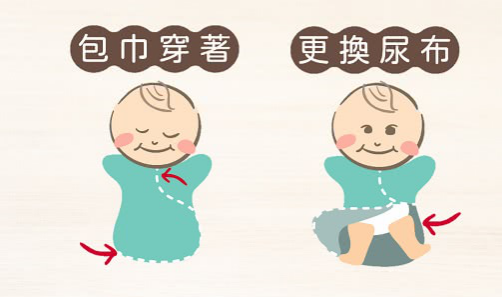
2. Back-Sleeping Swaddle
- Lay the swaddle flat and place baby in the middle.
- Place baby's left and right hands into the top pockets so baby lies in a back-sleeping position.
- If there is hook-and-loop or a zipper, just fasten it.
Easy swaddles are wrapped in a similar way: just place baby safely in the center, wrap baby, and fasten with the hook-and-loop closure.
3. Hat-Style Swaddle
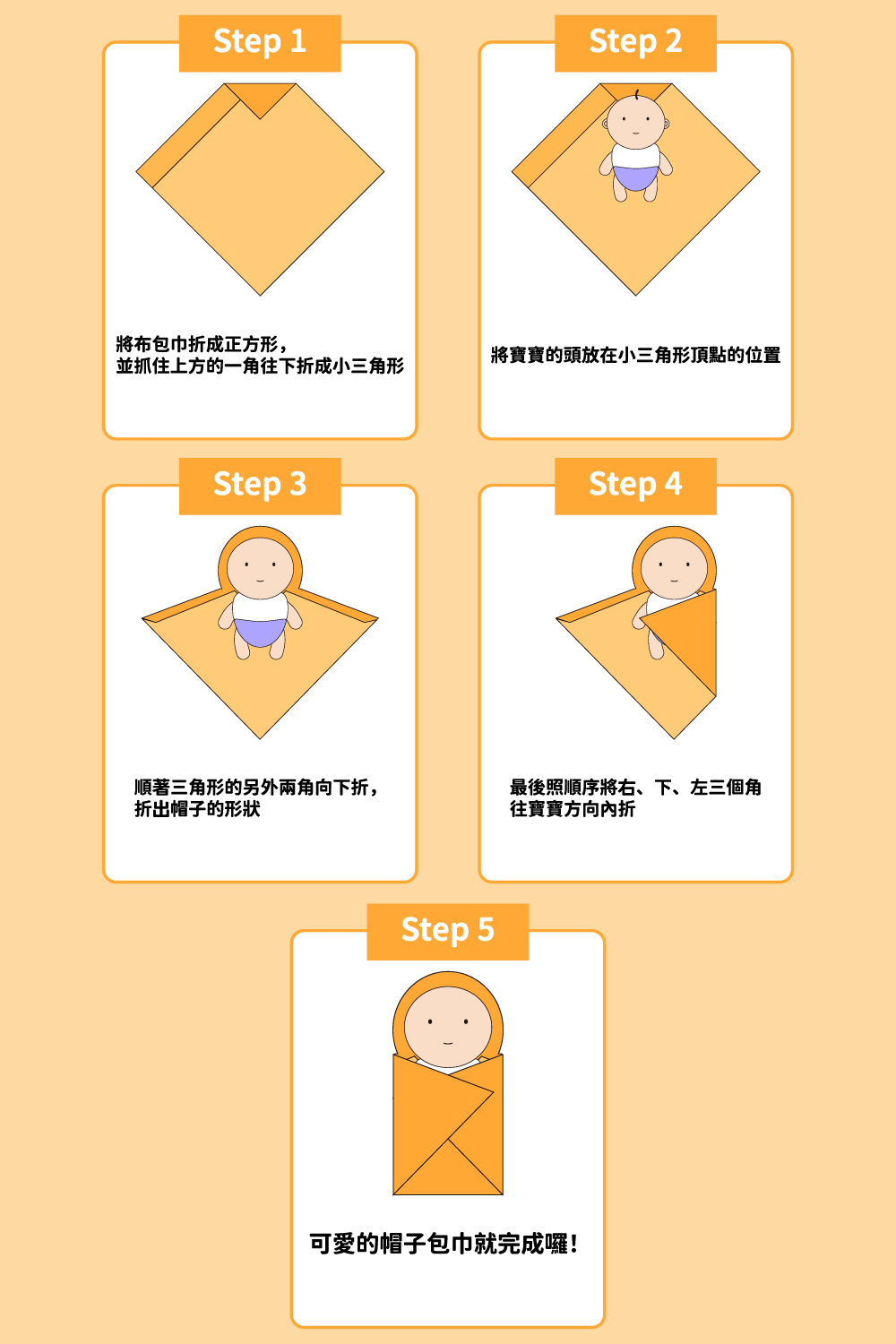
Besides the usual way to wrap a cloth swaddle, here's how to make the cute "hat swaddle." Give it a try!
- Fold the cloth swaddle into a square, and fold the top corner down into a small triangle.
- Place baby's head at the tip of the small triangle.
- Fold the other two corners of the triangle down to form the shape of a hat.
- Finally, fold the right, bottom, and left corners in toward baby in that order.
- Your cute hat swaddle is done!
Besides looking cuter than a regular wrap, the hat swaddle can also keep baby from catching a chill from wind on the head! Parents can give it a try!
How Do I Wash and Care for an Easy Swaddle?
Before first use of an easy swaddle or any other baby swaddle, always wash in cold water with a baby-specific mild detergent to avoid skin allergies from residual fabric processing aids. We suggest the following washing and care methods to keep the swaddle clean and long-lasting:
- Cold water or 40-degree warm water is recommended.
- Low-temperature tumble dry or air-dry in a ventilated place
- Low-temperature ironing or low-temperature tumble drying.
- Wash light and dark colors separately, and separately from adult clothing
- Using a laundry mesh bag in the washing machine is best.
- Before drying, wring out after hand washing, or spin dry in the machine, then sun-dry to sanitize.
- Use baby-specific or gentle detergent, and add rinse cycles to avoid detergent residue.
- Do not use strongly corrosive or irritating bleach.
- To avoid stubborn dirt, treat stains promptly: soak in baking soda for about 30 minutes, then scrub the spot. After soaking, put it in the washing machine and the dirt comes out easily.
- Avoid damp environments, and clean often to prevent mold.
Factors to Consider When Choosing a Baby Swaddle
When buying swaddles for a newborn, new parents can consider these factors:
- Material: Choose soft, breathable materials that are friendly to baby's skin.
- Season: Choose a swaddle thickness suited to the season.
- Size: Swaddle sizes may differ between brands, so choose a suitable size by baby's age, weight, or diaper size.
- Design: Prefer swaddles with good stretch and a back-sleeping design, and avoid overly complicated designs to reduce difficulty when dressing and changing diapers.
- Quantity: For easy daily washing and rotation, prepare at least two swaddles.
Notes on Using a Newborn Swaddle
When using a baby swaddle, new parents should note the following:
- Swaddle safety: A traditional swaddle with poor elasticity may not wrap securely, so baby easily kicks it open while moving, which affects the convenience of diaper changes. We therefore suggest choosing a more elastic material for a better wrap and to avoid restricting normal leg development.
- Back-sleeping design: A swaddle should avoid wrapping baby's hands across the chest to lower the risk of suffocation when rolling over. Choosing a swaddle that lets baby's hands rest naturally at both sides of the head helps build a back-sleeping habit and reduces rolling risk.
- Extended function: Choosing a swaddle that can convert to an anti-kick blanket not only extends its lifespan but also saves household spending, an economical choice worth considering.
What Problems Can Come From Using an Easy Swaddle Incorrectly??
Four possible effects are explained below:
- Pressure on the lungs:Research published in an American public health journal shows that when a swaddle is used incorrectly and restricts deep breathing, babies whose lungs are compressed by the swaddle are more prone to upper respiratory infections than other babies, about four times as much.
- Hip dislocation: European research found that 80% of hip dislocations are strongly linked to swaddle use. Some moms straighten baby's legs and then wrap baby tightly. This improper method keeps the thigh muscles tense for long periods, and the bone may slip out of the hip socket, causing hip dislocation. Baby's legs should be unrestricted and naturally bent so the bones can develop freely.
- Constipation:Squeezing the abdomen can slow stomach and intestinal movement, which may lower appetite and increase the chance of constipation.
- Less skin contact and heat release: Skin-to-skin contact lowers baby's stress, and experts encourage massaging baby and using touch to stimulate sensory development. Overusing a traditional swaddle to bind baby's limbs reduces awareness of body contact, which is not good for sensory development. Also, with hands and feet bound in a traditional swaddle, baby can't release heat by waving, and wrapping for too long may cause skin problems from stuffiness, so parents should watch the indoor air conditioning temperature.
From the above, choosing a newborn swaddle with a suitable design, breathable material, and good stretch, and using it the right way, is the first step in protecting baby's health.
Easy Swaddle vs. Traditional Swaddle: Which Is Better for New Parents?
- Easy swaddle: Has a hook-and-loop or zipper design for wrapping in a second, super simple to use and loved by new parents.
- Traditional swaddle: A cloth that can be adjusted flexibly as baby grows, but takes practice.
Which swaddle is best for new parents? If you fumble with diaper changes in the middle of the night, we recommend an easy swaddle with a[J-Shaped Two-Way Zipper Design]that makes changes easy without disturbing baby's sleep.
How Should a Baby Swaddle Be Used Correctly?
Here are three points to pay special attention to when using a baby swaddle:
- Don't wrap too tightly:Wrapping too tightly stops baby from moving hands and feet, blocking the stimulation that supports brain development, and also affects heat release, hinders normal breathing, and presses on the abdomen, lowering digestion and increasing spit-up. We suggest releasing baby at certain times; a swaddle doesn't need to be used all the time.
- Adjust wrapping by season: We suggest a cotton muslin swaddle. In hot summer, let baby's hands stay outside the swaddle, since overheating raises the risk of sudden death; in cold winter, put a small hat on baby to keep the head warm. If you use a thicker swaddle in winter, no extra blanket is needed.
- Face up, with legs free to stretch:Lay baby face up and make sure the legs and hips have room to move freely. Don't fix the legs in place, which may lead to developmental hip dysplasia. Once baby learns to roll over, stop the traditional swaddling method.
Do I still need a newborn swaddle after baby starts rolling over?
When baby enters the rolling stage but doesn't yet control movements steadily, you can keep using an easy swaddle during sleep to limit excess movement and help keep a safe position. When baby is awake in the daytime, open the swaddle so baby can practice stretching and rolling.
If baby can already roll over steadily, consider stopping the traditional swaddle and using the swaddle as an anti-kick blanket instead. Some babies depend on the swaddle to fall asleep, so we suggest limiting it to sleep time to avoid distress from stopping suddenly.
- Belly band: Adds tummy warmth, especially useful at night and in winter.
- Comfort cloth: Lets baby get used to the scent and feel, adding security and speeding up falling asleep.
- Gauze cloth / burp cloth: Use with the swaddle to keep it from getting wet or dirty and stay hygienic.
Swaddle Usage Notes and FAQ Q&A
Baby swaddles are a great helper for many new parents, but they are only safe and comfortable when used correctly. Here are usage notes and common misconceptions to help you care for baby with more confidence:
- Q1: How do swaddles compare for ease of putting on?
A1: Back-sleeping swaddle (butterfly swaddle) = wrap-style swaddle > traditional gauze swaddle - Q2: How easy are swaddles for new parents to get the hang of?
A2: Back-sleeping swaddle (butterfly swaddle) > wrap-style swaddle >> traditional gauze swaddle - Q3: How do swaddle prices compare?
A3: Back-sleeping swaddle (butterfly swaddle) > wrap-style swaddle > traditional gauze swaddle - Q4: How do swaddles compare for value?
A4: Some back-sleeping swaddles convert into an anti-kick blanket, and traditional gauze swaddles can serve as a blanket, so both are considered good-value items! - Q5: Why choose a stretchy swaddle material?
A5: Stretchy material improves wearing comfort.
- Q6: Is four-way stretch material necessary for a swaddle?
A6: Besides stretchy material, ordinary stretchy swaddles only stretch side to side, which only improves comfort. Four-way stretch material adds front-to-back stretch, so the swaddle is not easily kicked open when baby stretches the legs, which greatly reduces trouble for caregivers and doesn't restrict baby's development.
- Q7: At what age does baby no longer need a swaddle?
A7: Generally, once baby can roll over steadily and lift their head, at around 4-6 months, you can start gradually reducing swaddle use. Each baby develops at their own pace, though, and some still like to sleep swaddled, in which case you can switch to using it as an anti-kick blanket.
- Q8: What's the difference between an easy swaddle and a traditional swaddle?
A8: Easy swaddles are quick and convenient, needing no wrapping skills; a zipper or hook-and-loop wraps baby, which is especially good for new parents. Traditional swaddles are more flexible in use, such as a blanket or nursing cover, but take skill to use.
- Q9: How tight should a swaddle be to be safe?
A: A swaddle should follow the "snug on top, loose on the bottom" principle. The upper body (chest and arms) should be moderately snug, mimicking the womb's wrapped feeling to help reduce the startle reflex. But make sure you can easily slip 2-3 fingers between the swaddle and baby's chest so breathing stays easy. The lower body (hips and legs) must stay loose so baby's legs can bend and stretch freely into a natural M-shape or frog-leg position, avoiding pressure on the hip joints that could affect development. - Q10: How can I tell if baby is too hot or too cold?
A: Overheating is one of the risk factors for sudden infant death syndrome (SIDS). To judge baby's temperature, touch the neck or back rather than the hands and feet. If baby's neck and back are sweaty, cheeks are flushed, or breathing is fast, baby may be too hot. Choose a swaddle material and thickness with a suitable TOG (thermal resistance) value for the room temperature, along with light pajamas. The ideal room temperature is between 20-22°C. - Q11: Can a swaddle cover baby's nose and mouth and cause suffocation?
A: A swaddle used correctly does not cover baby's nose and mouth. It should wrap below baby's shoulders, away from the face and neck. Make sure the swaddle doesn't loosen or ride up, and always keep baby sleeping on the back. Also avoid placing any loose items in the crib, such as pillows, blankets, or toys, to lower suffocation risk. - Q12: Can using a swaddle cause bowed legs or hip dysplasia?
A: Bowed legs are a common physiological phenomenon in babies and are usually unrelated to swaddle use. However, an incorrect wrapping method can affect hip development. If a swaddle holds baby's legs overly straight or tight, it restricts the natural movement of the hip joints and may lead to hip dysplasia. Be sure to choose a swaddle with a loose bottom that lets baby's legs bend freely into an M-shape, and consider products certified by the IHDI (International Hip Dysplasia Institute). - Q13: Can I still use a swaddle after baby starts rolling over?
A: As soon as baby shows any signs of rolling over (usually at 2-4 months), stop using traditional swaddles or any swaddle that binds the hands. After rolling, if the hands are bound, baby may be unable to push up the head, raising suffocation risk. Switch to an anti-kick sleep vest or a growth-stage swaddle / sleep sack with arms free to keep baby safe during sleep. - Q14: How many swaddles do I need? How do I wash and care for them?
A: We suggest preparing 2-3 swaddles to rotate, for sudden situations like spit-up, drool, or wet diapers. When washing, always follow the instructions on the product label. You can usually machine wash gently with a baby-specific mild detergent; avoid fabric softener, which can affect the swaddle's breathability. For drying, air-dry naturally or tumble dry on low, and avoid high heat that can damage the fibers.
Bedtime Baby Swaddle Product Introduction
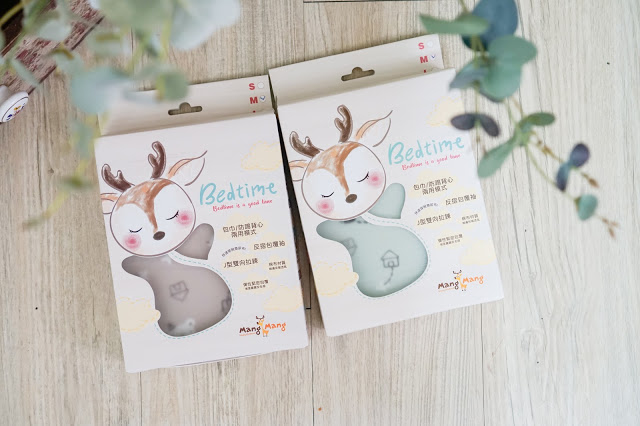
Bedtime Swaddle Design Philosophy
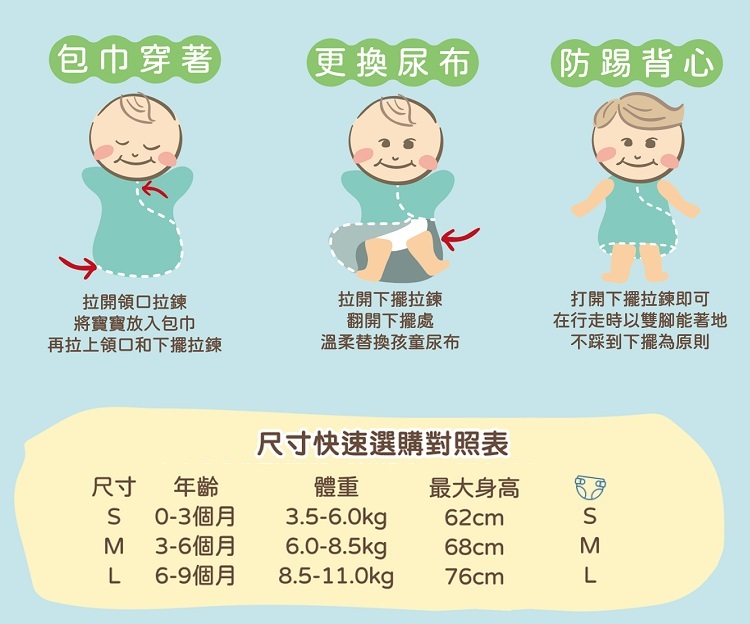
The Bedtime baby swaddle uses a "back-position arm sleeve" design that guides baby to get used to sleeping on the back and reduces rolling risk. With no buttons or zippers at the sleeves, the swallowing hazard is lowered. The cuffs fold over to prevent scratching in the early stage, and open up later to free the hands and support development.
The J-shaped two-way zipper opens and closes the hem quickly, so diaper changes won't disturb a sleeping baby. The material has four-way stretch, so baby's legs can stretch naturally without restriction, which also reduces the chance of kicking it open. Size S can be worn up to 1 year and beyond, and later converts into an anti-kick sleep vest for a longer life and great value.
Baby Swaddle Size Chart
Product Information:
-
Material: 95% cotton, 5% spandex
-
Sizes: S (0-3M), M (3-6M), L (6-9M)
-
Designed in Taiwan / Made in China
-
Note: Not returnable or exchangeable once opened. Please refer to the size chart before buying
Purchase Notes
Baby swaddles are "personal hygiene items" sold sealed for hygiene reasons and cannot be resold once opened, so baby swaddles are "not eligible for the 7-day trial period or no-questions-asked returns and exchanges." Be sure to check the size chart before you buy.
New Newborn Swaddle Recommendations | Cooling Summer Bedtime Baby Swaddle Product Introduction
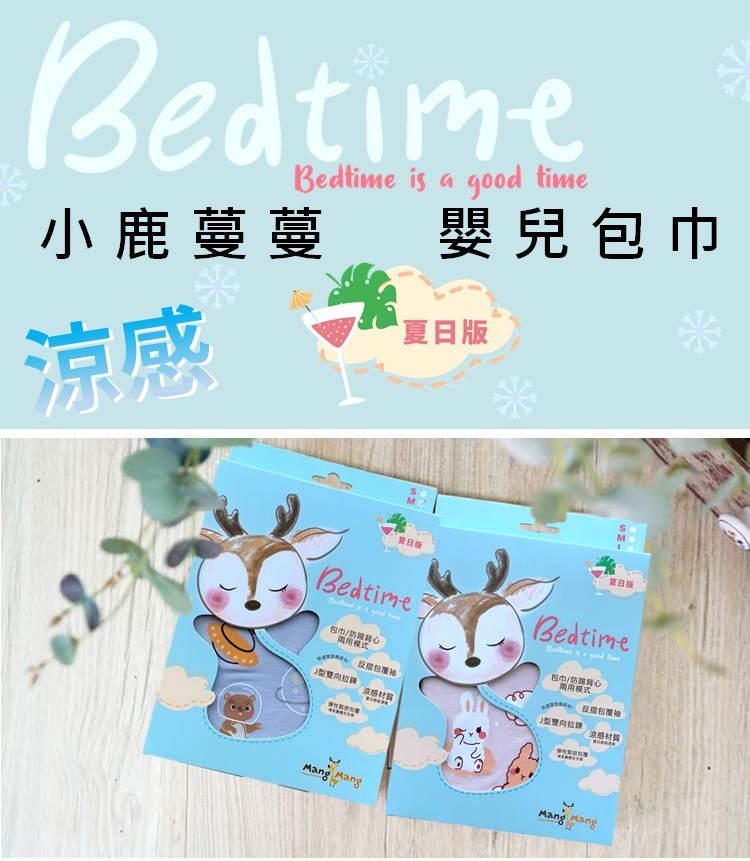
The Cooling Summer Bedtime swaddle is made for hot climates, with a lightweight, breathable, moisture-wicking material, Morandi colors, and playful illustrations to create a soothing sleep atmosphere. It keeps the original swaddle's features: arm sleeves, startle-reflex protection, and a J-shaped two-way zipper design.
Suitable for room temperatures of 23-28°C. Sizes M and L can extend to use as an anti-kick blanket, the top easy swaddle choice you can use with confidence even in summer.
Baby Swaddle Size Chart
Product Information:
-
Material: 50% cotton, 45% rayon, 5% spandex
-
Sizes: S (0-3M), M (3-6M), L (6-9M, wearable up to 18M)
-
Designed in Taiwan / Made in China
-
Note: Not returnable or exchangeable once opened. Please refer to the size chart before buying
SwaddlePurchase Notes
Baby swaddles are "personal hygiene items" sold sealed for hygiene reasons and cannot be resold once opened, so baby swaddles are "not eligible for the 7-day trial period or no-questions-asked returns and exchanges." Be sure to check the size chart before you buy.
▶ Related Products:[Mang Mang] Face 2 Face Bedside Crib
Favorite Easy Swaddle Recommendations | Mang Mang Newborn Swaddle Quality and Safety Certifications
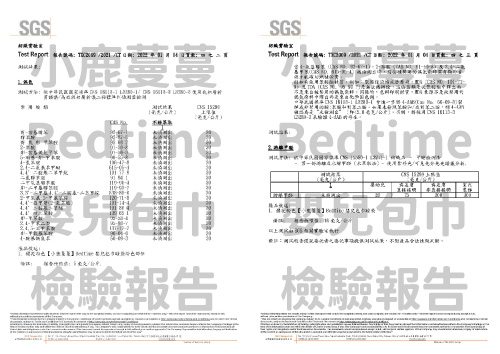
As the table above shows, swaddle prices vary quite a bit with material, but besides price and material, whether the swaddle has passed safety certifications is also a key point! Taiwan has clear requirements for infant textiles and the CNS 15290 standard, covering free formaldehyde, azo dyes, and lead content, all relating to whether clothing in contact with baby is safe!
Mang Mang swaddles have not only passed the CNS 15290 standard but also have an exclusive new swaddle patent, making them more convenient and reassuring for both baby and parents!
Easy Swaddle / Baby Swaddle Customer Reviews
[Newborn Swaddle Review] Mang Mang BEDTIME Baby Swaddle Sleep Sack, a Two-Stage Swaddle & Anti-Kick Sleep Vest | [Xiaoqiu Mama - Li Xiaohuo]
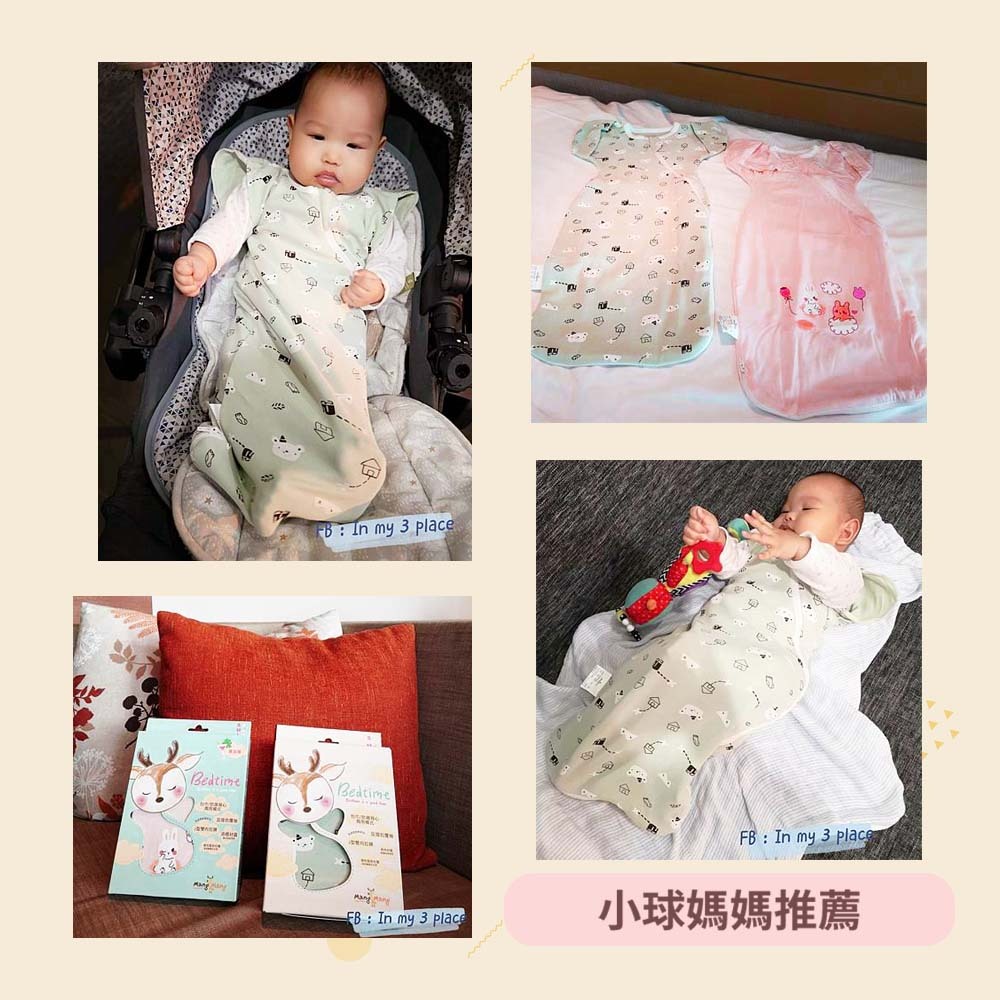
In our trial, although little sister Xiaoqiu can already roll over, she rolled over with no trouble at all in the swaddle sleep sack!! For baby to sleep well, besides natural temperament having a big influence, setting a fixed routine and then having a swaddle sleep sack to help can do a lot for new parents!... (continue reading)
[Easy Swaddle Review] Cooling Summer BEDTIME Baby Swaddle and BEDTIME Baby Swaddle Sleep Sack | [Huangdou Mommy's Baby Gear Journal]
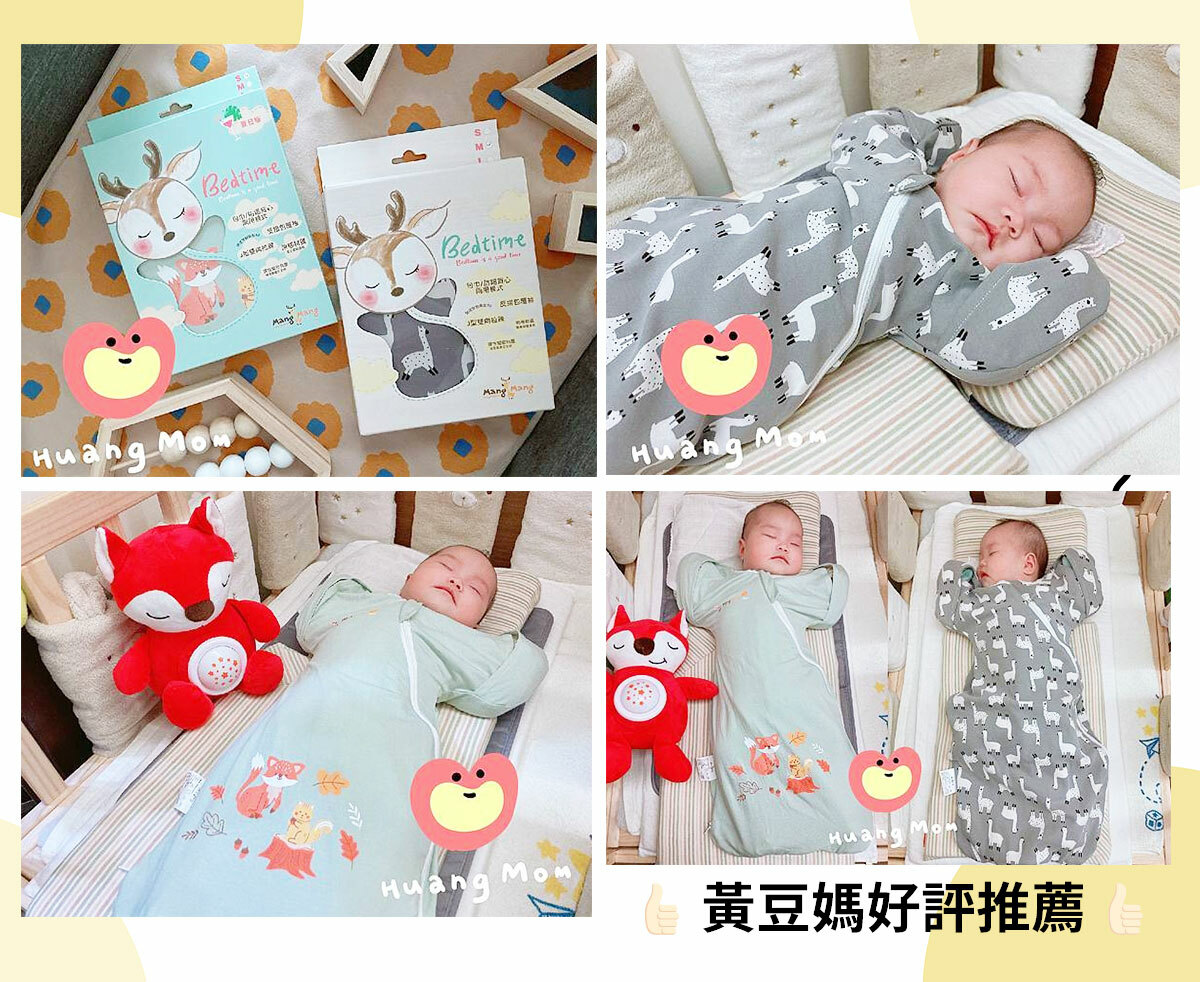
Mang Mang currently has two kinds of baby swaddles: the cooling swaddle and the four-season swaddle. The two are used and designed in similar ways; the biggest differences are the patterns and how the material feels. The material is thick but breathable, suitable for room temperatures of 20-26 degrees with a sleeveless or short-sleeve bodysuit underneath, comfortable and not stuffy.... (continue reading)
[Baby Swaddle Review] Affordable, High-Value Butterfly Easy Swaddle: Mang Mang BEDTIME Baby Swaddle Sleep Sack BY Man Mommy
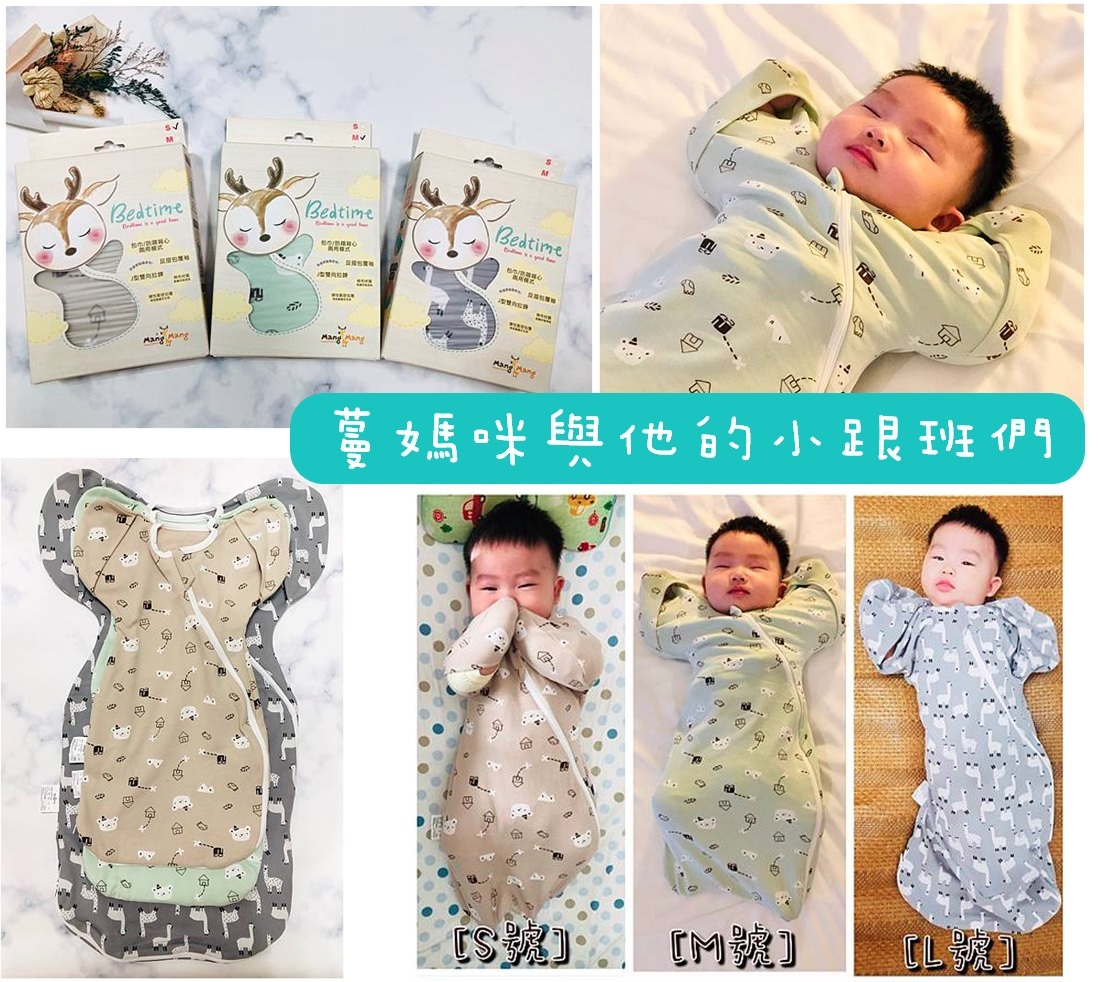
Since leaving the postpartum care center, Chenchen has always slept in a baby swaddle, at first mainly brands L and S. After receiving the Mang Mang swaddle to try over the past two or three months, Chenchen has accepted it quite well, probably because the cut is similar to brand L. As soon as it went on he started soothing his face with the little sleeve, and before bed he loves to nibble and lick his little sleeve, which is adorable.... (continue reading)
[Newborn Swaddle Review] Mang Mang Gave Our Daughter a Comfortable Sleep Environment BY Aiqi and Husband
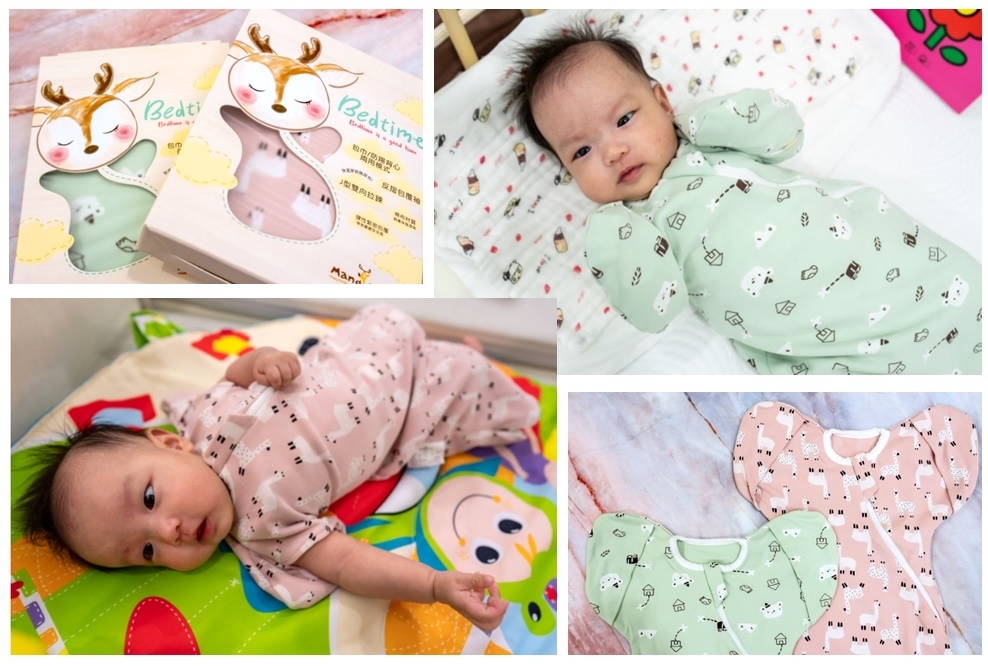
The green dotted "J" on the outside of the package makes one of the Mang Mang baby swaddle's strengths clear at a glance. To be honest, before trying it, the couple had also put their daughter in a very famous Australian swaddle, and comparing the two, they feel the Taiwanese brand is not inferior to foreign ones at all... (continue reading)
[Baby Swaddle Review] Wrapping Up Siblings' Close Bond: Mang Mang BEDTIME Baby Swaddle BY Leilei
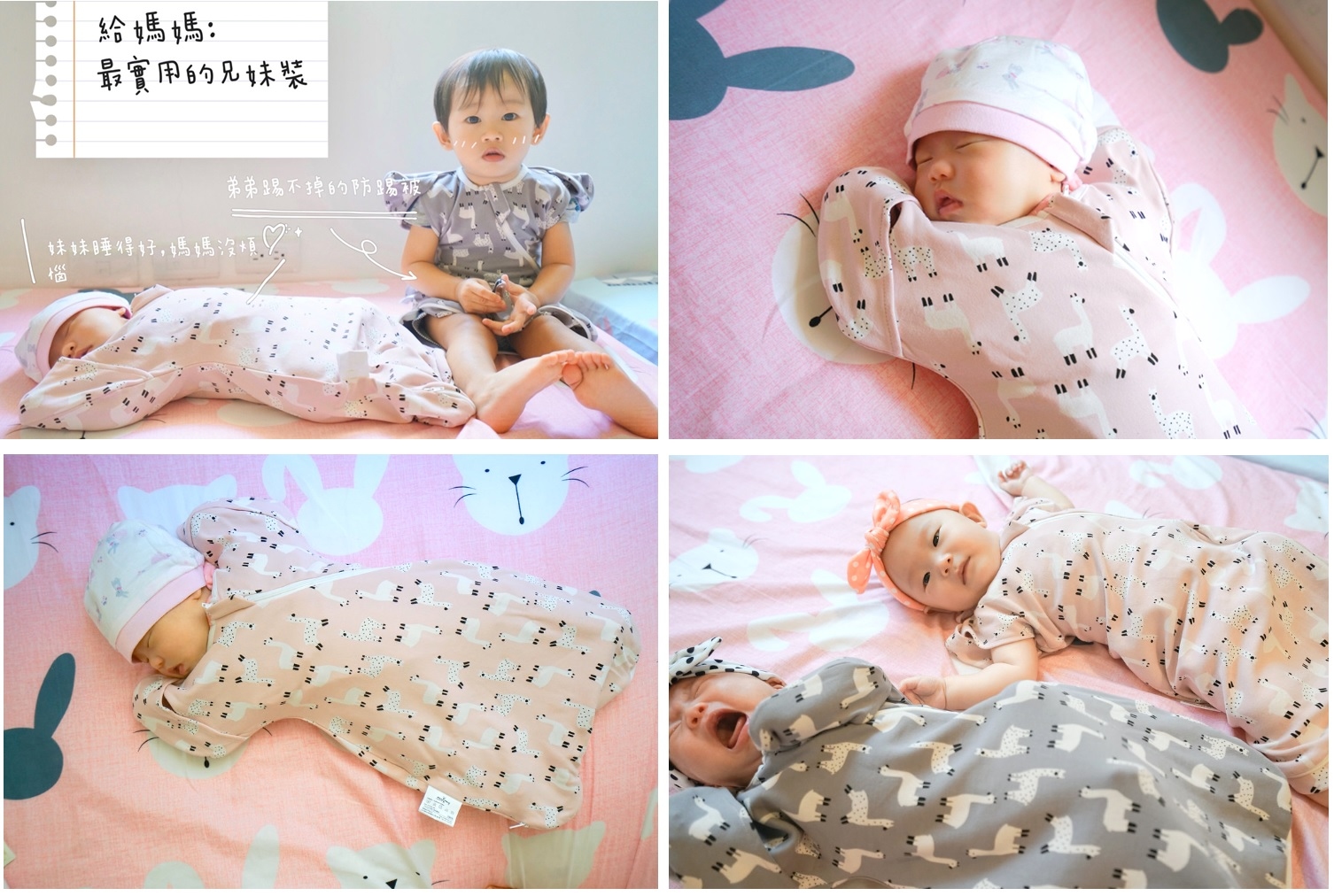
Leilei uses the Mang Mang Bedtime baby swaddle, which uses a zipper, unlike the hook-and-loop easy swaddles I used before. Baby often sleeps in a "hands up in surrender" pose, which I think is a more natural and comfortable sleeping position! Now little sister not only sleeps soundly, but I no longer have to wrap lots of cloth around her in bed~... (continue reading)
[Easy Swaddle Review] A Parenting Essential for Good Sleep Every Night: Mang Mang BEDTIME Baby Swaddle Sleep Sack, a Two-in-One Swaddle and Anti-Kick Sleep Vest BY Guo Xiaoshan
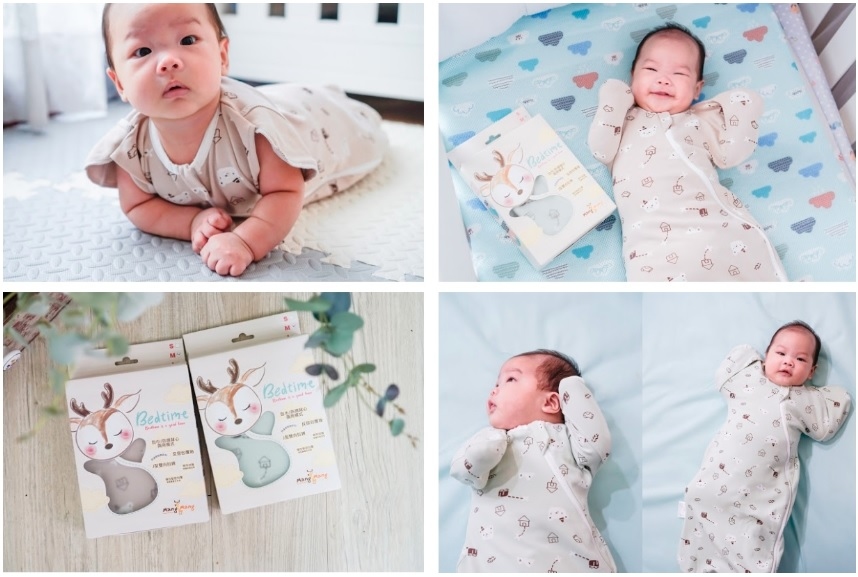
Today I'd like to recommend the Mang Mang Bedtime baby swaddle sleep sack. It has a cute name: "Bedtime" means exactly what it says, time for bed. (laughs) We hope baby sleeps soundly whenever wearing the swaddle sleep sack at "bedtime"!... (continue reading)
[Baby Swaddle Review] Mang Mang Baby Swaddle Sleep Sack, a Parenting Must-Have for New Parents BY Junchen Mommy
Simple steps get it on quickly, so mom no longer fumbles, and the swaddle sleep sack converts into an anti-kick sleep sack or anti-kick sleep vest, extending its use. A parenting essential for a good night's sleep, giving baby the security of being lovingly held. Mom of Junchen sincerely recommends the Mang Mang Bedtime baby swaddle sleep sack.... (continue reading)
Mang Mang's Selected Swaddle Recommendations | The Most Thoughtful Protection for Baby
Mang Mang is a quality Taiwanese baby swaddle brand. Built on perseverance and passion, it aspires to be a dream brand that keeps innovating and pursues the joy of childhood. We offer a range of baby swaddle styles, including the Bedtime baby swaddle and the Cooling Summer Bedtime baby swaddle, with strict quality control so parents can use them with confidence. Our different series of newborn swaddles have been recommended by well-known bloggers.
Whether for a newborn or a baby about to start rolling over, choosing a safe, comfortable, convenient baby swaddle not only helps baby sleep soundly but also makes every parenting moment easier for parents.
Shop the one that fits your needs nowBaby Swaddleand create a reassuring, comfortable parenting life!
▶ More Information:What Are the Benefits of Using a Crib? Key Points for Choosing a Bedside Crib!