
What Types of Baby Swaddles Are There? Styles and Materials Compared
When welcoming a new life, many parents are dazzled by all the swaddle choices: traditional swaddles, easy-wrap swaddles, newer designs. What is the difference, and which is best for your baby? The right swaddle is not only about comfort; it also affects your baby's safe sleep position and growth. This article explains the differences among the three main types of baby swaddles, from design features and ease of use to material choice, to help you pick with ease so every time your baby falls asleep feels like a gentle hug.
Three Common Types of Baby Swaddles
1. Traditional Swaddle
Mostly made of muslin, which stresses comfort and breathability. The tightness can be adjusted to your baby's weight and height, and even wrapped snugly there is no worry of stuffiness. Because a newborn swaddle has a large surface area, once your baby grows older it can also be used as a stroller cover, nursing cover, or small blanket, so it lasts a long time and is great value. However, it is a bit more fiddly to use than other swaddles and takes some time to get the hang of at first.
2. Easy Swaddle
Since traditional swaddling involves complicated steps, "easy-wrap swaddles" have appeared on the market. They need no prior learning, and a few simple steps wrap the baby securely, making them easier for new parents. A common design uses hook-and-loop fasteners to hold the swaddle in place and keep the baby's arms below the shoulders.
3. New-Style Swaddle - Back-Sleeping Swaddle
Besides allowing room for the baby's hands to move, this ergonomic design aims to keep the baby sleeping on their back with arms placed on both sides of the head, which reduces the chance of rolling onto the tummy and greatly lowers the chance of newborn suffocation.
Babies often want to get their arms out to move, and can easily wriggle out of a swaddle, so a new type of swaddle was born. It uses wrap sleeves that cover the baby's arms while still letting them move freely. This type can be used as a swaddle for newborns, and once the baby is four months or older, the two wrap sleeves can be undone so the baby can develop fine hand movements. Better-designed new swaddles can also become a kick-proof blanket, and when the baby is walking, can convert into a sleep vest. Providing different ways to wear it for different stages, it extends how long the swaddle can be used and saves you money.
Medical research: Letting babies raise their arms freely, with enough room to move below the waist, allows bones to develop and grow without restriction.
Comparing Uses of Easy-Wrap Swaddles
Based on the three common swaddles above, Mang Mang has summarized the features and uses of each style:
2. Fold-back arm sleeves
3. Two-way zipper, so diaper changes are less likely to wake baby
4. Keeps baby in a back-sleeping position, adding security
2. Adds security
3. Keeps baby in a back-sleeping position
2. Long service life
3. Takes time to practice
For outings / sleeping blanket
Replace every 3-4 months
Usable up to 12 months at most
From the table, although a traditional swaddle has a long service life, it takes time to learn. Thenew butterfly swaddleis simply laid under baby on the back and zipped up; for diaper changes you just unzip it. The new swaddle is also stretchier than a traditional one, and although the price is higher, it is clearly more convenient.
Differences in Newborn Swaddle Materials
So how do the materials of different baby swaddles differ? The table below covers several common swaddle materials.
2. Bacteriostatic and antibacterial
3. Absorbent and breathable
4. UV-resistant
5. Odor-absorbing
2. Lightweight material
3. Highly breathable
4. Stays cool
2. Moisture-retaining and warm
3. Soft material, gentle on sensitive skin
4. Easy to wash and resistant to pilling
5. Heat-resistant and alkali-resistant
Breathability and instant water absorption decline gradually
Slow to dry after washing
Multi-layer material easily breeds bacteria
Different swaddle materials have different pros and cons and things to watch for in buying and use!
Sizes and thickness vary by brand, so moms can choose a suitable size according to baby's height and weight. We also suggest changing swaddle thickness with the weather and buying 1-2 extra swaddles to rotate, since baby may spit up or drool and soil a swaddle, and having another to switch to is better!
How to Dress Your Baby in a Swaddle
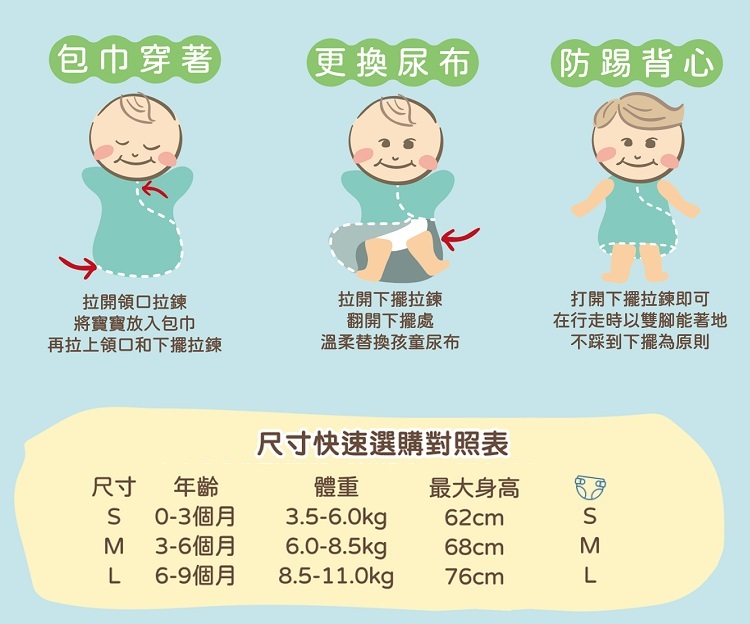
Different styles and materials of swaddles each have their own strengths and best uses. Traditional swaddles stress high stretch and multiple uses; easy-wrap swaddles make care quick and easy; and newer back-sleeping swaddles balance safety with freedom, accompanying your baby from the newborn stage onward. If you want a swaddle choice that is both safe and convenient, we suggest considering the new Butterfly swaddle series first. It adapts as your baby grows, from swaddle to kick-proof sleep vest, all in one piece.
▶ Learn more:How to Choose a Newborn Swaddle? What to Know When Using One